
What I'm Writing
On family influencers, the perils of intercountry adoption, and more

I have been critical of influencers who exploit their children for followers, money, and to promote messaging for years. I first wrote about the phenomenon for The Baffler back in 2022, focusing on the niche of evangelical foster momfluencers who use other people’s children to spread the Gospel. Last year, I wrote for the New York Times Magazine about two docuseries that tell the stories of family influencer scandals (Ruby Franke and the Stauffers) while concealing the faces of the children involved—a gesture at restitution that nonethless cannot get around the queasy truth that we never should have seen these children grow up online in the first place. So when I heard about journalist Fortesa Latifi’s new book Like, Follow, Subscribe: Influencer Kids and the Cost of a Childhood Online, I knew I needed to read it and cover it.
Latifi has been covering family influencers for years, and in Like, Follow, Subscribe, she offers an inside view of the industry, how parents think about exposing their children’s daily lives online, what the kids themselves feel about growing up on social media, and how the financial possibilities of high-level influencing cause parents to discount the very real dangers of sharenting. It makes for a disturbing read, and a somewhat frustrating one, as Latifi fails to take a clear stance on the ethics of family influencing and what ought to be done about it.
I was grateful, then, to be able to pick apart exactly those questions for the Atlantic (gift link). Thanks to my editor, Emma Sarappo, for thinking through how to approach this critique with me and making the piece stronger than it would have been otherwise.

Speaking of that Baffler article on evangelical foster momfluencers—back when I was working on piece, I read Kathryn Joyce’s The Child Catchers: Rescue, Trafficking, and the New Gospel of Adoption to better understand the “orphan care” movement that galvanized evangelicals to promote the international adoption of children in the early 2000s—a movement that later shifted to promoting fostering children domestically. I also interviewed Joyce about that shift. It was in The Child Catchers that I first read about Bertha and Harry Holt, a born-again couple who essentially created the international adoption industry in the aftermath of the Korean War by operating “babylift” flights of supposed orphans and mixed-race “GI” babies.
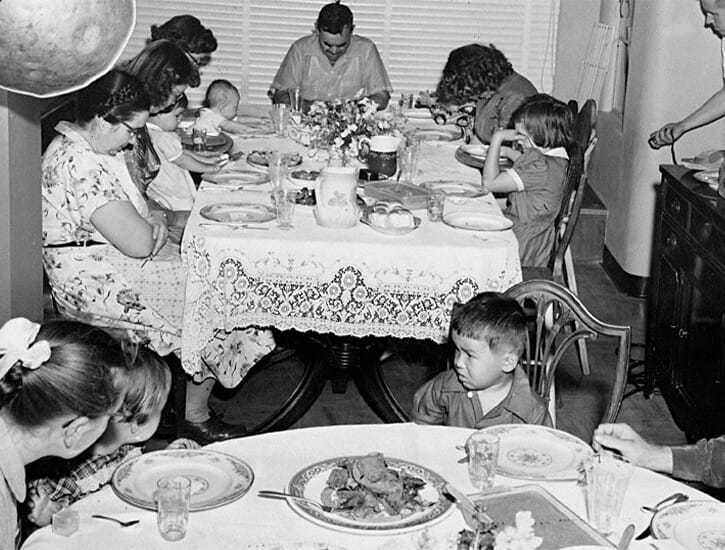
A few months after my Baffler article ran, I copyedited a Publishers Marketplace deal announcement for a book on the Holts by Paige Towers, and then waited eagerly to be able to request the eventual galley to read and cover. So in a way, it’s only appropriate that I returned to the Baffler to review Tower’s devastating book What They Stole: A Familicide Rooted in Intercountry Adoption, which intertwines the story of the Holts’s messianic quest to “rescue” paper orphans from South Korea with the story of a familicide in Iowa in 2008, where four children adopted from Holt were murdered by their adoptive father. What They Stole is filled with harrowing details of the Holts’s hubristic, “holy” plan to remove children from postwar Korea and send them to live with Christian families in the U.S.—a plan that both the Korean and U.S. governments abetted despite how utterly unsuitable the Holts were to the task, and despite the rampant fraud involved in separating Korean children from their families. That Holt International would come to be considered the “Cadillac” of the international adoption industry by the 1990s only underlines how corrupt this industry is.
In somewhat lighter news, I have two more recent reviews to share. For Alta, I reviewed Zinzi Clemmons’s essay collection Freedom, her first book since her 2017 novel What We Lose (which I have yet to read but am all the more eager to now!). You may remember that in 2018, Clemmons was among the women who accused Junot Díaz of sexual misconduct—she does write about that here, brilliantly, but you mustn’t skip the other essays on limits of personal, political, racial, economic, and gender-based liberation and how those bounds might be surpassed.
And for the New Republic, I was so thrilled to review Candice Wuehle’s new novel Ultranatural. If you’ve been following my work for a while, you might remember that I ADORED her debut novel Monarch, about a beauty queen who realizes she’s a sleeper agent. Ultranatural, which remixes Britney Spears’s meteoric rise and fall in a story that exposes the alienated labor at the core of pop stardom, is just as deliciously weird. I couldn’t put it down.